Archive for the 'English' Category

bumbler

Tuesday, August 12th, 2008

Das väterliche Gesetz sollen wir uns nicht als deterministischen göttlichen Willen vorstellen, so im Sinne eines gütigen Graubards mit stark geäderten Armen, die jederzeit zupacken und vernichten können, wenn sie nicht länger gütig angesehen werden wollen, also bitte das Gesetz nicht mittels der Figuren Michelangelos sich vorstellen oder darstellen, sondern flattrig, unklar und wechselhaft, als ständigen “bumbler”.

(more…)

Nils Röller: Dao – One

Monday, August 4th, 2008

“The dao produced one, the one produced two, the two produced three, and the three produced all things …” *
Am Anfang war das Dao. Es produzierte eins. Unwillkürlich fasse ich das Dao im Rahmen christlicher Muster auf. Im Sinne: Am Anfang war das Wort und das Wort war bei Gott. Damit verwische ich die Möglichkeiten, Differenzen zu erkunden. Das Dao ist unpersönlich. Es ist etwas, das produziert. Es wird durch seine Produktion charakterisiert: eins. “eins” ist etwas, das nichts Konkretes bezeichnet. Es ist nicht die Rede von einer Welt oder einem Himmel und einer Erde. Das Dao produziert ein Geschöpf, eins. “eins” wird zu etwas bestimmtem, “eins” wird zu die Eins, wenn eins produziert. Zunächt ist “eins” nichts anderes als ein Geschöpf.

Was können wir mit dem Geschöpf beginnen? “eins” legt nahe, Verschiedenes auf eines zurückzuführen, zwei zum Beispiel, die Zwei zum Beispiel, drei zum Beispiel, die Drei zum Beispiel, alle Dinge zum Beispiel, Dinge, die uns betreffen und nicht betreffen und Dinge, die uns indirekt und direkt betreffen, die Dinge dieser und anderer Welten.
* Canon of the Virtue of Dao. Quoted after: Chen (Joseph) Cheng-Yih: “Cultural Diversities: Complentarity in Opposites”. In: Zielinski, S. und Fürlus, E. (eds.): Variantology 3. Cologne: Walther König, 2008, p. 163.

(more…)

Ranjit Hoskote: Die Entdeckung der Sinne

Thursday, July 24th, 2008

Berührung durchmisst die kurzen Entfernungen dieses Zimmers,
(more…)

Ritual and Mathesis

Monday, July 7th, 2008

Primitive rituals, … [argues] Mumford, were “basic to the whole development of human culture”; they stabilized Paleolithic man through repetitive acts that produced predictable effects. Early man was first a collector and later a hunter; from animals he learned how to gather food before discovering how to kill for it. Kings created the prototype machines from people: they organized manpower to build monuments and wage war. Source: Time Magazine, Friday, Jun. 09, 1967

Zukofsky on technoloy

Sunday, July 6th, 2008

Technology throws light upon mental conceptions.
“intervals of gradualness.”
Quantity into quality.
Or sweetness: where there is more light than logic.
A full number of things in a very few words.
(Louis Zukofsy: A acht)

Zukofsky quotes Paracelsus

Saturday, July 5th, 2008

Paracelsus`Book of Bad and Good Fortune:
The sun shines upon all of us equally
With its luck. The summer comes
To all of us equally
With its luck. Our love is unequal
(Louis Zukofsky: A zwölg)

Zukofsky on learning II

Wednesday, June 25th, 2008

– A telegraph?
– Every word weighs.
– And the the telephone teaches?
– Also. What we say
Here is heard there.(Zukofsky, A 12)

Tuesday, June 24th, 2008

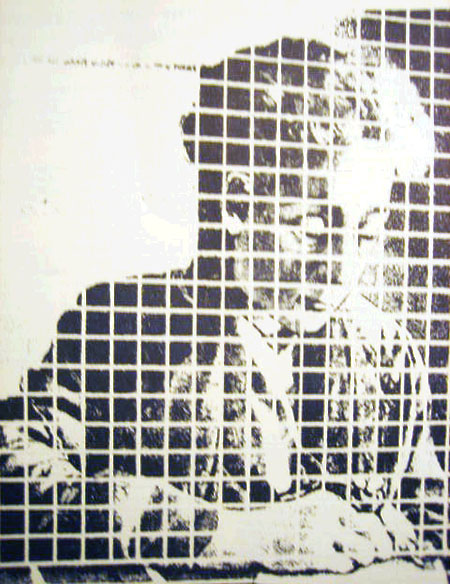
phbhintergitternzurlippe-025.jpg
Source: Rudolf zur Lippe: Geometrisierung des Menschen. Oldenburg: Bibliotheks- und Informationssystem der Universität Oldenburg, 1983, p. 5.

Zukofsky on learning I

Sunday, June 22nd, 2008

If it helps, diffract crystals and tracers.
Rabbi S said:
– You can learn from everything.
What man has made
Has also something to teach us.
His chassid jumped:
– Does a train?
– Yes, in a second
One may miss everything.

(Zukofsky, A 12)

Saturday, June 21st, 2008

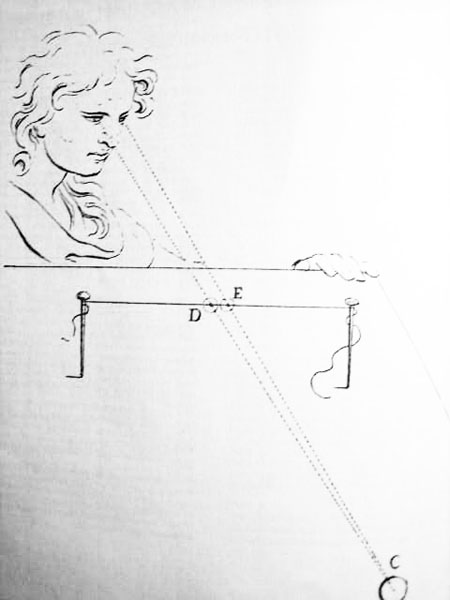
phbaugenrichtunglippe.jpg
Source: Rudolf zur Lippe: Geometrisierung des Menschen. Oldenburg: Bibliotheks- und Informationssystem der Universität Oldenburg, 1983, p. 4.