Archive for the 'Null/Zero' Category

I -

Wednesday, February 4th, 2009

Was stelle ich mit dir an?
Was stelle ich mit mir an?

Wenn ich einen Buchstaben neben einen anderen setze?
d zu i, m zu i?
Was ändert sich zwischen dir und mir?

Und wenn ich mir der Ungeheuerlichkeit bewusst wäre,
könnte ich dann noch schreiben?
Könnte ich dann noch eine Verbindung zu dir suchen?

I I

Monday, February 2nd, 2009

Der Raum zwischen zwei Zeichen, dort zu lesen, sich dort einen Aufenthaltsort suchen, heisst das mit der Zeit zu hadern? Wo aber bleibt dann die Welt, die Aufgaben, die auf uns warten?

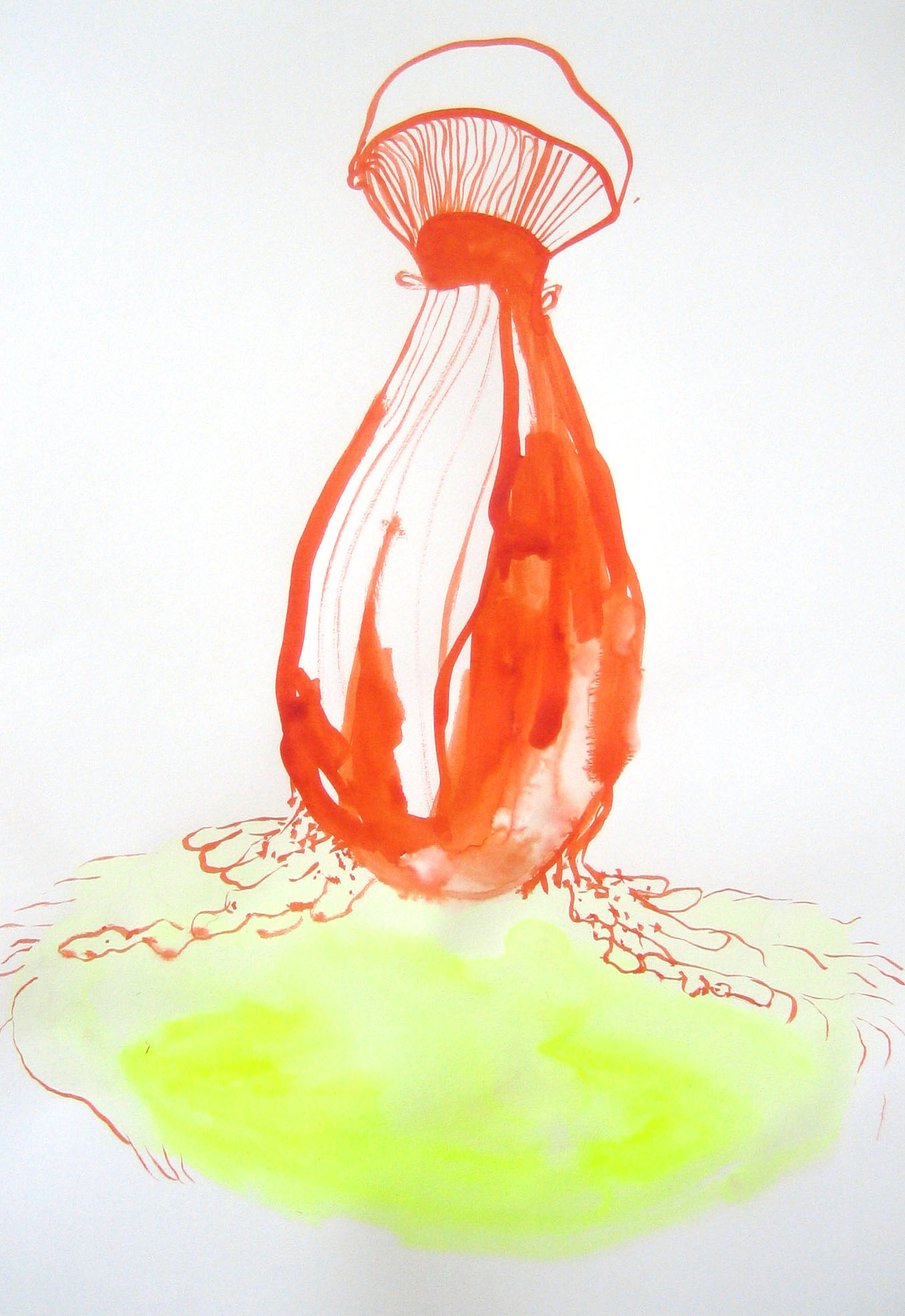
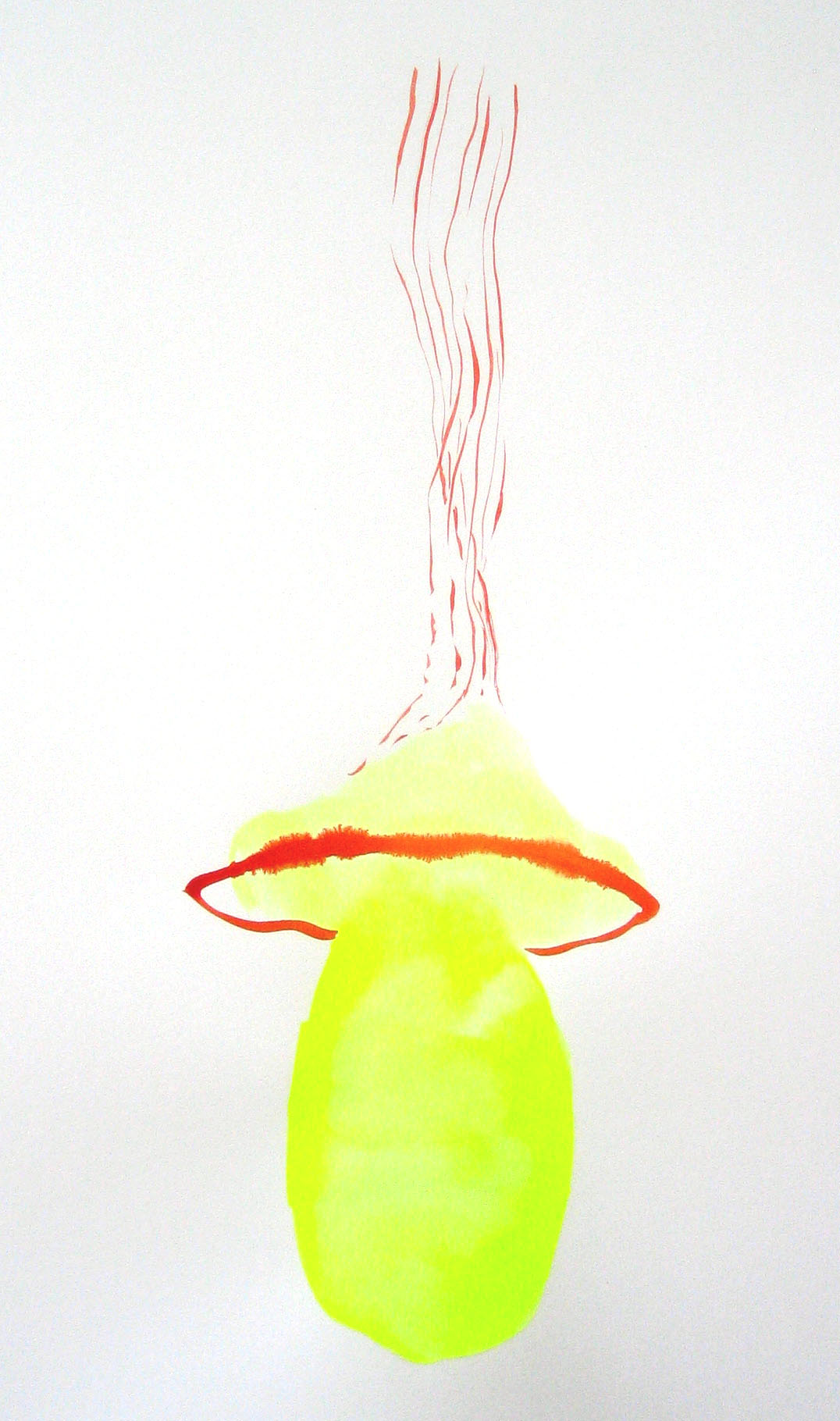
Barbara Ellmerer: Electric Field

Tuesday, January 27th, 2009

Nils Röller: A Reply to Sampurna Chattarji`s Imitation Game

Saturday, January 24th, 2009

Is it me,
is she me,
is it that it is a he?
Humming imitation game?

Machine you make out of me,
no problem,
but why it-ify me and she-ify me and not machinify me, who am but a machine?

Who am I?
One of those beings that process your text, a text about you not being like me, but you.

But …
But, who are you, not-machine?
Something that needs me, a machine, in order to play the imitation game?

xxx

Sampurna Chattarji: Imitationsspiel (Deutsche Übersetzung)

Sampurna Chattarji: Imitation Game (Englisches Original)

Nils Röller: I

Nils Röller: Turing Tests

Nils Röller: Turing Tests


Barbara Ellmerer: Electric Field

Wednesday, January 21st, 2009

Sampurna Chattarji: Imitationsspiel*

Tuesday, January 20th, 2009

Diese Maschine hat nie eine Schlangengrube im Magen gespürt, wie es ist, dort hineinzufallen, fern von rettendem Seil und Korb, jenseits helfender Hände, weiss nicht, wie es sein kann, aufzuwachen und zu wünschen, tot zu sein.

(more…)

Sampurna Chattarji: Das Imitationsspiel*

Monday, January 19th, 2009

Diese Maschine hat nie Schmerz gefühlt,
schlief nie in einem zu weichen Bett und träumte von Morden, die vor Jahrhunderten begangen wurden, trank nie zuviel Rotwein und barte Seelenvolles vor Trinkfreunden auf, von allem redend ausser von Liebe.

(more…)

Sampurna Chattarji: The Imitation Game

Tuesday, January 6th, 2009

This machine has never felt pain.
Never slept in a too-soft bed dreaming of murders committed centuries ago, never drunk too much red wine and bared its soul to its drinking companion, talking of everything but love.

This machine has never
felt the pit of snakes in its stomach drop down past the reach of rope and basket, past the help of hands, has not known what it might be like to wake up wishing it were dead.

This machine has never worn
a too-big straw hat to keep out the sun on an October afternoon, never laughed so much its belly ached, never sat sipping tusli tea from a borrowed glass under a winter moon, listening to an old Hindi song sung by a young South Indian voice…

(more…)

Nils Röller: I

Friday, January 2nd, 2009

I: an English letter which stands for myself,

I: solid, a solitaire, a one letter word.

EGO: a Latin triple, two vowels appearing like elephants ears and the G: somehow open and not open.

ICH: again a triple, a German: a solid statue seems to offer itself as a construction supporting the C: the openness towards what is coming next. The H serves as a rocket, catapulting the C into other dimensions.

I: solid like a skyscraper, tender and rank like Pounds New York,

I: one tower of the World Trade Center, no longer proud and solid, but vulnerable and suffering from recycling its dignity.

I: fragile not since September 11, but since Turings paper of 1936/37, challenging Descartes`Ego, by programming:

I = blank or – , i.e. possibly nothing.

Nils Röller: On Art, Sex and Mathematics II- Interest

Tuesday, December 9th, 2008

Nils Röller: On Art, Sex and Mathematics II- Interest

Tao means at first “path“.

Reading about Tao, we learn that it is all about opposites and the energy that can create a balance between two poles, for example the energy that rises up from the earth and the energy that descends from the sky. From the study of opposites it is possible to infer something about the relationship between the sexes. Tao tells us that this relationship is dynamic rather than static: a taking in and letting out of the steam that arises when water is heated, by Qi. Tao also tells of the unity and diversity that emerge from one, two and three. A linear model derives from Tao the one, then from one the two, from two the three, and from the three all things.

Another model is binary. It derives from Tao a Yin and a Yang. One Yin gives rise to connections between Yin and Yang. And one Yang gives rise to connections between Yang and Yin. Of Yin and Yang it is said that one gives off energy and the other takes it in. The intake and expenditure of energy has to do with Tao. Yin and Yang are not simply male and female, but they can indeed change the discourse about what is male and female. The Qi that flows between them is invisible; it is not restricted to organs, blood vessels or body parts, but it does change attitudes toward bodies, biological gender and gender identity. Through Qi we can conceive of male and female as poles.

Polarity is one of Oken’s central concepts. He writes:

“Polarity can be seen as a single setting of +-: and when this setting is repeated, movement results, from setting many +- +- one after the other. The main poles thus repel one another, like what happens on a iron pole when it is magnetized.” (§ 80)

Similar here does not mean the same. Oken regards nature as the realization of ideas. The sum of all ideas is zero, nothingness, which is also what constitutes God: “In the ether everything is preformed, just as everything mathematical is preformed in zero, and everything that acts is preformed in God: but this is also why nothing individual is preformed therein; instead, it comes about only when the poles are fixed in substance. This is the true meaning of the original creation of the organic.” (§ 954)

(Translation by Jennifer Taylor)

To be continued

Literature

Chen (Joseph) Cheng-Yih: “Cultural Diversities: Complementarity in Opposites”. In: Zielinski, S. und Fürlus, E. (eds.): Variantology 3. Cologne: Walther König, 2008

Butler, Judith: Das Unbehagen der Geschlechter – Gender Studies [Routledge 1990]. Frankfurt: Suhrkamp, 1991

Jullien, François: Über das Fade – eine Eloge – Zu Denken und Ästhetik in China [Arles 1991]. Berlin: Merve, 1999

Needham, Joseph: Science and Civilisation in China Vol. IV (Physics and Physical Technology), Part 1 (Cambridge, 1962)

Oken, Lorenz: Lehrbuch der Naturphilosophie. Zürich: Schulthess, 1843

Röller, Nils: “Thinking with Instruments: The Example of Kant`s Compass”. In: Zielinski, S. und Fürlus, E. (eds.): Variantology 3. Cologne: Walther König, 2008